

This post may contain affiliate links, which means we may earn a commission if you choose to make a purchase at no additional cost to you. All products are carefully selected based on quality, relevance, and how well they fit into a consistent, active routine.
Here’s the simplest way to think about the days after Thanksgiving: don’t try to make up for anything. Just make your next normal choice. Eat a regular meal when you’re hungry, drink some water, take a walk or do your planned workout at a sensible intensity, and set yourself up for an easier tomorrow with a few small anchors around sleep, meals, movement, and work.
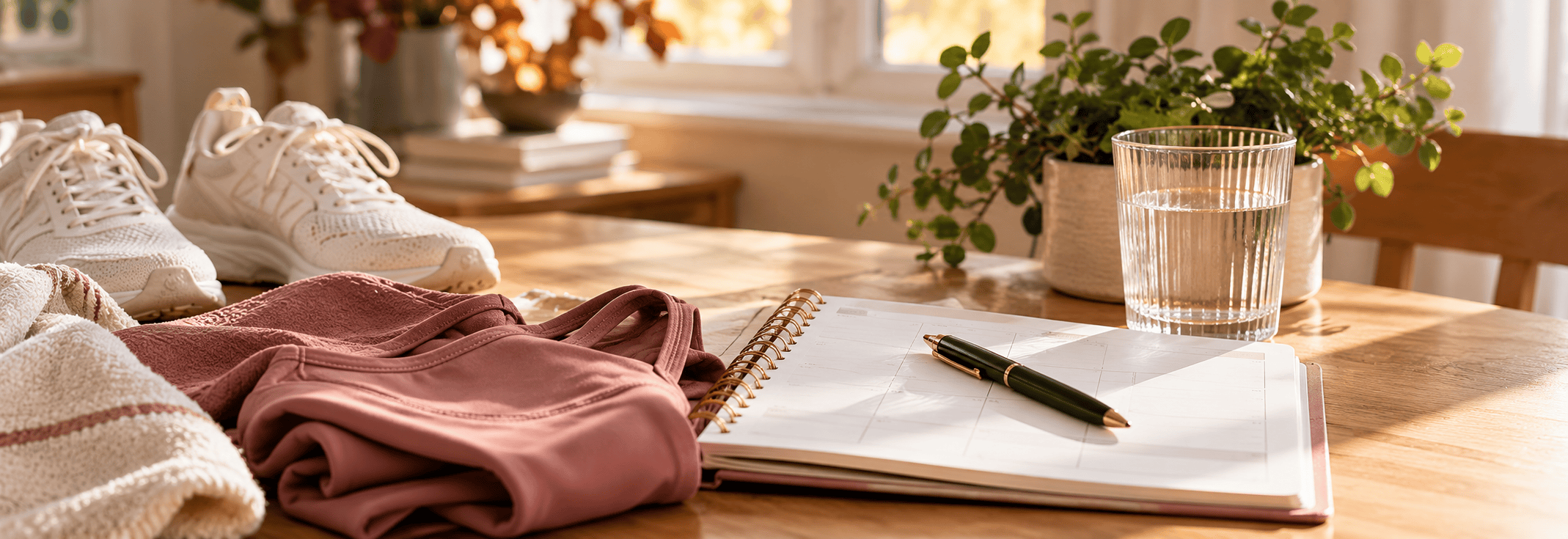
You don’t need a cleanse, a fast, a punishing workout, or a picture-perfect “healthy Monday” to reset. Thanksgiving is one meal, or one weekend, inside a much longer routine. The real job is keeping the disruption from turning into an all-or-nothing spiral.
If you ate more than usual, slept poorly, skipped a few workouts, or spent the weekend traveling, it makes sense that you’d feel a little off. But feeling off doesn’t call for an extreme response. Going back to your familiar structure is usually more useful than a dramatic reset.
Start With Your Next Normal Decision
The fastest way to feel grounded again after Thanksgiving is to stop treating the holiday like a problem you need to fix.
Don’t skip meals to compensate for what you ate.
Don’t turn your first workout back into a punishment.
Don’t wait for Monday, January, or some perfectly clean slate.
Don’t decide that a plate of leftovers means the week is already ruined.
Do choose one normal meal, one reasonable movement decision, and one small piece of prep for tomorrow.
NIDDK guidance on healthy eating and physical activity notes that setbacks can happen and recommends regrouping and returning to established habits rather than giving up after one off-routine occasion.
For a lot of women, the more useful question isn’t “How do I undo Thanksgiving?” It’s “What would make tomorrow easier?”
In This Article



Hydro Flask 24 oz
Standard Mouth Bottle
The 24-ounce size is built to fit most cupholders, and Hydro Flask states that its insulation keeps drinks cold for up to 24 hours. It makes the most sense if you want one bottle that moves between your desk, car, gym bag, and everyday routine.
See the Hydro Flask 24 oz Standard Mouth Bottle →You don’t need a new bottle to make hydration part of your reset. If you already carry one consistently, just use that.
That might mean grocery shopping, laying out your workout clothes, packing lunch, washing your hair, going to bed a little earlier, or simply deciding on breakfast in advance. Small actions like these can restore some continuity because they clear a few decisions off your plate before the next morning starts.
Your Post-Thanksgiving Reset: Four Anchors
Keep coming back to these four anchors as your schedule settles. They’re intentionally simple because the point is to reduce decision fatigue, not create another project for yourself.
Return to
regular meals
Choose movement
that helps, not
movement that punishes
Use hydration, sleep,
and simple meals to
feel more like yourself
Set up Monday
before Monday
arrives
1. Return to Regular Meals
After a big Thanksgiving meal, it’s tempting to skip breakfast, “be good” all day, or try to eat as little as possible to offset the day before. Instead, go back to meals that feel familiar and satisfying.
A PRACTICAL POST-THANKSGIVING
DAY MIGHT LOOK LIKE:
A normal breakfast with protein, fiber-rich carbohydrates, and something you actually enjoy
A simple lunch instead of grazing on leftovers all afternoon
A balanced dinner that uses leftovers intentionally, if you want them
Snacks when they genuinely help you get through a long stretch between meals
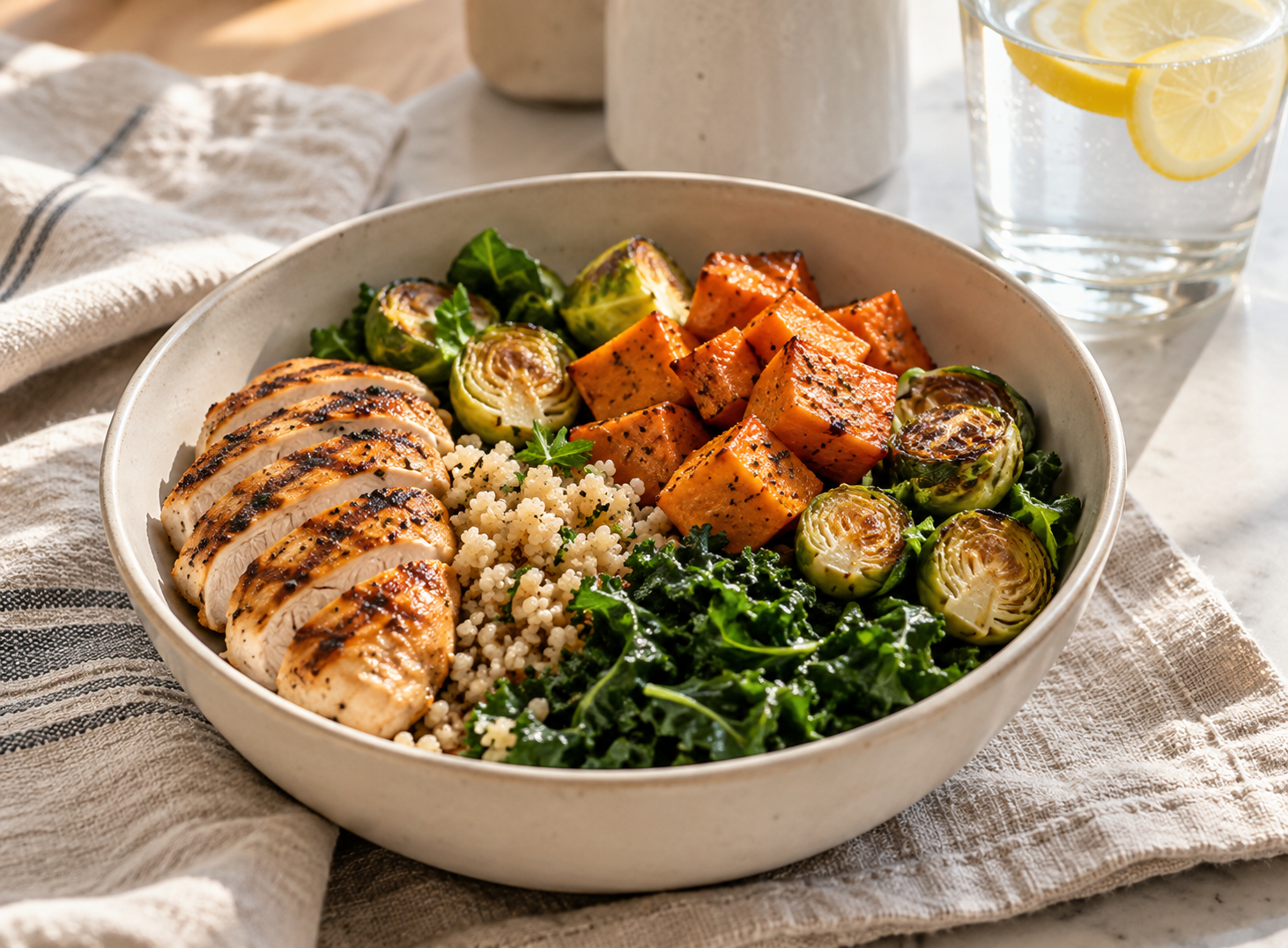
Thanksgiving foods aren’t off-limits here. Turkey, roasted vegetables, sweet potatoes, stuffing, and pie can all fit into normal eating. The difference is structure: plate what you want, sit down to eat it, and move on rather than picking at food all day just because it’s within reach.
If your fridge is still packed with leftovers, give them a job. Decide which meals they’ll cover, freeze what won’t get used soon, and move the less-useful grazing foods out of sight. One small decision can make the rest of the weekend feel much less chaotic.
2. Choose Movement That Helps, Not Movement That Punishes
A workout after Thanksgiving can be a good way to reconnect with your routine, especially if movement tends to leave you feeling clearer and more energized. Just don’t use it to earn food or repay a meal.
If you feel rested and your normal training session is realistic, go for it. If you’re tired, traveling, sore from sitting around, or short on time, choose the version that actually matches your day.

The bigger goal is simply returning to movement. It doesn’t need to be your hardest session of the month.
Public-health guidance supports building activity across the whole week rather than relying on one oversized effort. For adults, the baseline recommendation is at least 150 minutes of moderate-intensity activity weekly, plus muscle-strengthening activity on two or more days, and those totals can be accumulated in ways that fit a real schedule.
3. Use Hydration, Sleep, And Simple Meals to Feel More Like Yourself
When people say they want to “feel better after Thanksgiving,” they’re often describing something bigger than food. They’re tired, a little bloated, over-socialized, behind on life admin, and coming down from several days without their usual sleep and movement patterns.
You don’t need a detox protocol for that. Start with ordinary care:
Drink water consistently through the day.
Eat meals at reasonably regular times.
Include produce and protein in your next few meals.
Take a brief walk after sitting for long stretches.
Aim for an earlier bedtime if the holiday weekend shifted your sleep.
Restock the groceries that make weekdays easier.

If keeping water nearby is the piece that actually helps you get back into rhythm, the Hydro Flask 24 oz Standard Mouth Bottle is a practical option. The 24-ounce size is built to fit most cupholders, and Hydro Flask states that its insulation keeps drinks cold for up to 24 hours. It makes the most sense if you want one bottle that moves between your desk, car, gym bag, and everyday routine, not something you’re buying just to get through Thanksgiving weekend.
See the Hydro Flask 24 oz Standard Mouth BottleYou don’t need a new bottle to make hydration part of your reset. If you already carry one consistently, just use that.
Your body may temporarily feel different after a holiday meal, especially if your usual sodium intake, alcohol intake, sleep, or meal schedule shifted. That temporary discomfort isn’t evidence that you need to restrict, panic, or start a rigid plan. Give yourself some time to settle back into your normal patterns before drawing any big conclusions about your body or your routine.
If you have a medical condition, a history of disordered eating, or symptoms that feel severe or persistent, personal medical guidance should always take priority over general lifestyle advice.
4. Set Up Monday Before Monday Arrives
One of the easiest ways to make the return to routine feel less chaotic is to remove a few decisions before the next busy morning.
A 15-MINUTE RESET CAN BE SIMPLE:
Check your calendar for the next two days.
Choose your next workout window or walking plan.
Decide on breakfast and lunch for tomorrow.
Put away, freeze, or portion your long stretches.
Set out what you need for the morning.
Go to bed at a time that gives tomorrow a fair chance.
This is where getting back into your routine after Thanksgiving becomes practical. You’re not rebuilding your entire life in one evening. You’re clearing the friction around the next handful of decisions.
Say Monday includes an early meeting and an evening workout. Make the plan before bed: breakfast is already decided, lunch is packed, and your workout clothes are ready. That’s much easier than waking up and negotiating every choice in real time.

What To Do After Overeating On Thanksgiving
Eat normally at your next meal.
Drink water.
Skip compensatory fasting or an extreme workout.
Take a gentle walk if it sounds good.
Sleep.
Return to your usual food and movement structure as your schedule settles.
You don’t need to label the day “bad,” and you don’t need to erase it. One holiday meal doesn’t determine your health, your body, or your consistency. What matters is returning to your ordinary habits afterward.
Common Post-Thanksgiving Mistakes
Trying to Start a Strict Reset Immediately
A highly restrictive plan can turn the days after Thanksgiving into another set of food rules to manage. Keep the focus on returning to your familiar routine instead.
Scheduling an Unrealistic Workout
A two-hour workout isn’t more virtuous than a 25-minute walk or your usual strength session. Movement is most useful when it supports a routine you can actually repeat, not when it’s the biggest thing you do all month.
Treating Leftovers as an Emergency
Leftovers are food, not a test of willpower. Plan a few meals around what you enjoy, share or freeze the extras, and let the rest of your kitchen go back to normal.
Waiting for the “Right” Day
If Thanksgiving happened Thursday and your routine already feels off by Friday, start Friday. If the long weekend stretches through Sunday, use one anchor at a time. You don’t need a calendar-approved reset date.
Making the Whole Holiday Season a Write-Off
Thanksgiving can be a single disrupted meal, a long weekend, or the start of a packed social season. Those are different situations. Address the one you’re actually in instead of assuming the rest of the year is already lost.
A Realistic Example
Say you had Thanksgiving dinner late, stayed up talking with family, ate leftovers Friday, skipped your usual workout, and now you’re tempted to spend Saturday eating as little as possible. A calmer reset could look like this:
A Calmer Saturday Reset
No compensation. No starting over. Just a few ordinary choices that bring some structure back into the day.
Eat a regular breakfast Saturday morning.
Take a 20-minute walk or do a low-pressure workout.
Portion leftovers into intentional meals instead of grazing.
Grocery shop for two or three weekday staples.
Choose one workout window for next week.
Get to bed at a reasonable time.
You’re not trying to undo Thanksgiving. You’re simply putting a few pieces of your normal routine back into place.
When Your Routine Still Feels Off
If the disruption came with travel, family stress, poor sleep, or several days of back-to-back events, you may need more than one normal day to feel settled. Keep using the four anchors and lower the bar for what counts as a successful routine right now.
Your minimum viable routine might look like:
Your Minimum
Viable Routine
When your routine still feels off, keep a few familiar basics in place while the rest of your week settles.
Regular meals
A daily walk or brief movement session
One planned workout this week
A simple bedtime reset
A short Sunday planning session
The objective is continuity, not an immediate return to your most optimized week.
When you’re ready to rebuild the broader systems that make daily life feel organized, not just in the days after a holiday, your next step should be a full weekly reset routine. That’s where you re-establish groceries, workouts, work priorities, laundry, meals, and the practical foundations that make consistency easier the rest of the year.
FAQs
Should I work out after Thanksgiving?
You can, if movement feels good and fits your schedule. Choose your normal workout or a lighter option based on your energy, sleep, travel, and available time. Just don’t use exercise to compensate for what you ate.
Should I skip meals after Thanksgiving?
For most people, there’s no need to deliberately skip meals to compensate for Thanksgiving. Return to your usual eating pattern as your appetite and schedule settle. If you have individual nutrition needs or a medical condition that affects meal timing, follow the guidance that’s appropriate for you.
How long does it take to get back into a routine after Thanksgiving?
There’s no set timeline. For many people, returning to a few familiar habits over the next several days can help restore the basics. If you traveled or had a particularly busy holiday stretch, expect a gradual return rather than an overnight reset.
What is the best workout after Thanksgiving?
There’s no single best post-Thanksgiving workout. Choose the option that matches your actual energy and schedule: your normal strength session, a walk, some mobility work, or a short workout you can complete comfortably. The point is to return to your usual movement pattern, not make one workout compensate for the holiday.
Bottom Line
Getting back on track after Thanksgiving doesn’t require a cleanse, skipped meals, or an extra-hard workout. Start by returning to a few ordinary habits: regular meals, realistic movement, hydration, sleep, and a small amount of prep for the next day.
Make your next decision a normal one, not a corrective one. Eat when you’re hungry, move in a way that supports your energy, and set up one or two routines that make the next busy day easier.
If Thanksgiving also came with travel, poor sleep, several social events, or a stressful family schedule, give your routine time to settle. Keep the bar practical and focus on your minimums rather than trying to recreate your most polished, productive week immediately.
A strong routine isn’t one that never gets interrupted. It’s one you know how to return to calmly, without guilt or overcorrection.
